
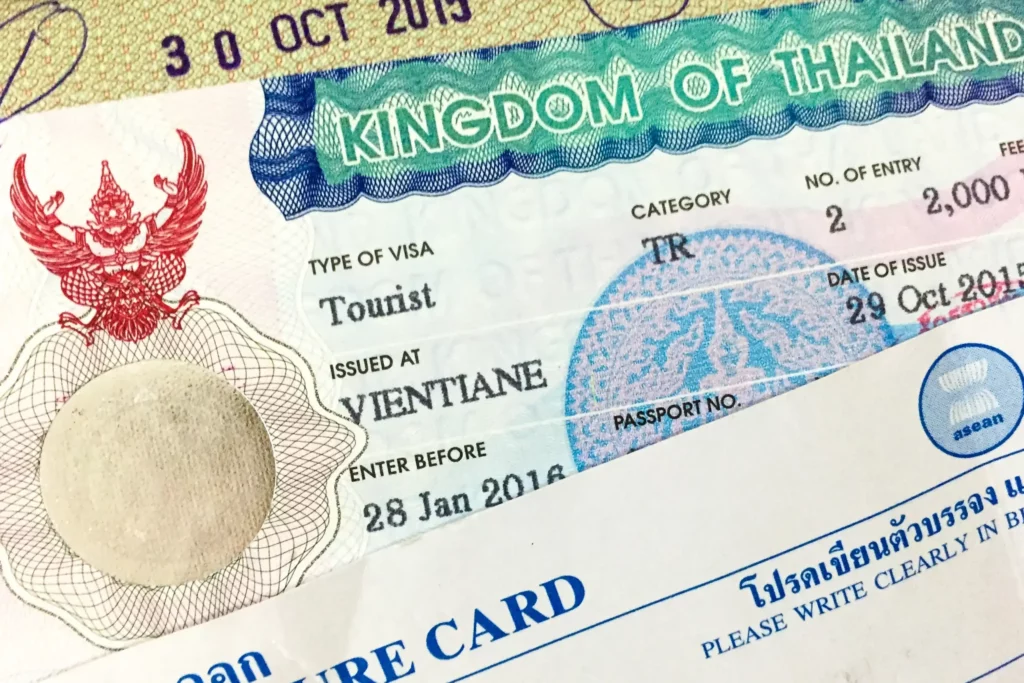
Business Visa in Thailand. Thailand remains one of Southeast Asia’s primary commercial hubs, attracting foreign investors, entrepreneurs, executives, and professionals seeking to establish or participate in business operations within the country. Foreign nationals intending to conduct legitimate commercial activities in Thailand are generally required to obtain a Non-Immigrant Business Visa, commonly referred to as the Non-Immigrant “B” Visa.
A business visa functions as the legal foundation allowing foreigners to enter Thailand for business-related purposes such as investment, company management, corporate meetings, or preparation for employment. However, possession of a business visa alone does not automatically authorize employment. Instead, it operates within a broader regulatory framework involving immigration law, labor law, and corporate compliance requirements.
This article provides a comprehensive examination of Thailand’s business visa system, including eligibility criteria, application procedures, permitted activities, renewal processes, and ongoing legal obligations.
Legal Framework Governing Business Visas
Business visas are regulated under Thailand’s Immigration Act B.E. 2522 (1979) and administered by the Royal Thai Immigration Bureau. The visa category is designed to facilitate lawful entry of foreign nationals whose presence contributes to commercial, investment, or professional activities within Thailand.
The Non-Immigrant B Visa supports several legitimate purposes, including:
-
establishing or registering a company,
-
attending business negotiations or conferences,
-
managing corporate operations,
-
conducting feasibility studies,
-
preparing for work permit application,
-
investment supervision.
Immigration authorities assess applications to ensure that business activity aligns with Thailand’s economic and regulatory policies.
Types of Non-Immigrant B Visas
Business visas are generally issued under two primary formats depending on intended duration and purpose.
Single-Entry Business Visa
A single-entry Non-Immigrant B Visa allows entry into Thailand once, typically granting an initial stay of up to 90 days from arrival. This category is commonly used by individuals entering Thailand to begin employment arrangements or establish business operations before applying for long-term extensions.
Once the holder exits Thailand, the visa becomes void unless re-entry authorization has been obtained.
Multiple-Entry Business Visa
A multiple-entry visa allows repeated entry during its validity period, usually one year. Each entry permits a stay of up to 90 days, after which the holder must depart and re-enter Thailand unless an extension of stay has been approved.
This category is often suitable for regional executives or investors managing operations across multiple countries.
Eligibility Requirements
Applicants must demonstrate genuine business intent supported by a sponsoring organization or investment activity.
Typical eligibility requirements include:
-
invitation or employment letter from a Thai company,
-
company registration documents,
-
evidence of business operations,
-
passport validity exceeding six months,
-
financial evidence demonstrating ability to support stay.
Where employment is anticipated, the sponsoring company must meet regulatory requirements concerning capitalization, licensing, and operational legitimacy.
Immigration officers assess whether the proposed activity represents bona fide commercial engagement rather than unauthorized employment.
Application Procedure
Business visa applications are normally submitted at a Royal Thai Embassy or Consulate outside Thailand.
Step 1: Documentation Preparation
Applicants prepare supporting documents including:
-
completed visa application form,
-
passport photographs,
-
company invitation letter,
-
corporate registration certificates,
-
shareholder information,
-
business objectives or employment confirmation.
Documentation requirements may vary depending on embassy jurisdiction.
Step 2: Embassy Review
Consular officers review applications to determine whether business activity complies with immigration policy. Additional interviews or clarification requests may occur where documentation is incomplete or business purpose requires verification.
Approval results in visa issuance permitting entry into Thailand.
Step 3: Entry into Thailand
Upon arrival, immigration officers grant permitted stay duration consistent with visa classification, typically 90 days.
During this period, applicants intending to work must proceed with work permit applications through the Ministry of Labour.
Relationship Between Business Visa and Work Permit
A critical distinction exists between business visas and work permits.
A business visa permits:
-
business discussions,
-
company establishment,
-
investment activities,
-
preparation for employment.
However, performing work—including management or operational duties—generally requires a valid work permit.
Foreign nationals engaging in employment without a work permit may face legal penalties even if holding a valid business visa.
Therefore, the business visa frequently serves as the preliminary step toward lawful employment authorization.
Extension of Stay Based on Business Activities
Foreign nationals wishing to remain in Thailand beyond the initial 90-day period may apply for an extension of stay at the Immigration Bureau.
Extensions are commonly granted for up to one year where applicants demonstrate:
-
valid work permit,
-
ongoing employment,
-
company tax compliance,
-
sufficient corporate capitalization,
-
continued business necessity.
Extension approval converts short-term entry into long-term residence tied to employment or investment status.
Re-Entry Permits
Foreign residents holding extended business visa status must obtain a re-entry permit prior to leaving Thailand.
Failure to secure re-entry authorization results in automatic cancellation of the permitted stay, requiring restart of the visa process.
Re-entry permits may be issued for single or multiple travel purposes.
Employer and Corporate Compliance Requirements
Immigration approval depends heavily on corporate compliance.
Companies sponsoring foreign nationals must maintain:
-
accurate financial reporting,
-
tax payment records,
-
employee registration compliance,
-
operational office presence.
Authorities increasingly verify physical business operations to prevent misuse of visa sponsorship arrangements.
Non-compliant companies risk visa cancellation affecting sponsored employees.
Reporting Obligations for Visa Holders
Foreign nationals residing in Thailand under business visa extensions must comply with immigration reporting requirements.
90-Day Reporting
Residents must report their current address to Immigration every 90 days, either in person, online, or through authorized representatives.
Address Notification
Changes in residence must be reported within statutory deadlines.
Failure to comply may result in fines and administrative complications during visa renewal.
Common Legal Risks and Compliance Issues
Business visa holders frequently encounter issues arising from misunderstanding permitted activities.
Common risks include:
-
engaging in employment prior to work permit issuance,
-
incorrect job descriptions,
-
inactive sponsoring companies,
-
failure to maintain immigration reporting compliance.
Authorities increasingly apply substance-based review, examining whether activities match declared business purposes.
Special Programs for Investors and Executives
Thailand offers enhanced immigration pathways for certain investors and skilled professionals through programs such as:
-
Board of Investment (BOI) promotion,
-
Eastern Economic Corridor (EEC) initiatives,
-
long-term investment visa schemes.
These frameworks may streamline visa issuance, work authorization, and residency procedures while maintaining regulatory oversight.
Practical Considerations for Foreign Business Professionals
Successful long-term residence under a business visa depends on coordination between immigration status, labor authorization, and corporate compliance.
Foreign nationals should ensure:
-
accurate alignment between visa purpose and activities,
-
timely renewal applications,
-
proper documentation maintenance,
-
compliance with reporting obligations.
Business visas function most effectively when integrated into a broader legal strategy supporting employment, investment, or corporate management objectives.
Conclusion
The Thai business visa serves as a critical legal mechanism enabling foreign participation in the country’s commercial environment. By regulating entry and business activity through structured immigration controls, Thailand balances economic openness with regulatory oversight.
While obtaining a Non-Immigrant B Visa provides lawful access for business engagement, long-term stability depends upon compliance with work permit regulations, corporate requirements, and immigration procedures. Proper understanding of these interconnected obligations allows foreign entrepreneurs and professionals to conduct business operations in Thailand securely and within the framework of Thai law.